Showing posts with label musings. Show all posts

Thursday, February 18, 2016

Five

Lisa, my friend, mentor, and boss, challenged me to answer five questions about this school year.  We'll see how far I get before baby awakes.  Also, I apologize in advance if my writing is sub-par.  Sleep deprivation, folks.  I suggest we all go treat our moms and dads to a steak dinner for all the sleep they sacrificed for us.

Without further ado...

What has been your ONE biggest struggle during this school year?

Fear.

Or maybe more accurately:  FOMO (fear of missing out).

I fear I'm missing out on my students' lives while I'm on maternity leave.  I know there are milestones in their learning (of math and of life) that I won't get to witness.  And then, when I return to school, I fear missing milestones in my son's life.  He's only two weeks old. I get that he won't remember any of this.  But--as exhausted as I am--it kills me to leave him.  I can't win either way.  I want both worlds.  But I can't have them simultaneously.

Share TWO accomplishments that you are proud of this school year.


  1. I made it to four hundred posts on the One Good Thing blog.  The blog honestly changed my life.  Every day, I--along with several other educators around the country--post one good thing that happened at school.  Our mantra is, "Every day may not be good, but there's at least one good thing in every day."  I recognize that life is hard and that some days are...not good.  But searching for the good regardless has been incredibly therapeutic.
  2. I've had four students this year tell me they want to be a math teacher because of me.  (I know it's not only because of me, but I'll take it anyway.)  Each of these students is bright, compassionate, and fun-loving.  I know they will all make amazing teachers, should they continue on that route.  But, even if they don't, I'm so humbled that they think enough of me and of my career choice to want to emulate it.  In a world state where teachers are often undervalued and certainly underpaid, I'm proud to say that I'm helping the next generation see our worth.  I'm hoping they'll join us in making a positive difference in Oklahoma public education.


What are THREE things you wish to accomplish before the end of the school year?


  1. I'd like to make it to five hundred posts on the One Good Thing blog.
  2. I want to have at least as high of a pass rate on the AP Calculus Exam as I did last year.
  3. When the school year is over, I don't need my kids to remember me.  But I would like for them to remember how they felt being in math class:  I hope that they leave knowing that their teacher will always love them, respect them, fight for them, and be there for them.  I hope they feel that on a daily basis.  And I hope I act in such a way as to never cast any doubt.


Give FOUR reasons why you remain in education in today's rough culture.


  1. I love being around teenagers.  I think they're funny, vulnerable, smart, and completely inspiring.  I know I learn more from them then they could ever learn from me.  They challenge me to be the best version of myself every day.  It's an impossible challenge, but one that I'm thankful for regardless.
  2. I love mathematics.  I would be hard-pressed to find a job where I get to do this much math every day.
  3. I'm stealing this one from Lisa:  If not us, then who?
  4. I believe we're called to repair the brokenness that exists in the world.  I'm a Christian.  And while I openly apologize for the insensitivity, the irrelevance, and the complete asinine behavior that often accompanies the church, I won't apologize for what I believe.  What I believe is that God created this world to be perfect and whole, but when He created human beings He abdicated His right to control (this is where some Christians may disagree with me).  That abdication was necessary for humans to be able to love...but that must mean we are also capable of hatred.  And, hence, we've created a "brutiful"--a brutal and beautiful--world.  But, God entered the world again through Jesus, and Jesus called us to continue bringing heaven to earth--to continue to repair what has been broken.  For me, this reconciliation means teaching.  It means helping students discover their worth.  It means letting them know that they are kind, important, valuable, and smart.  It means showing them that they, too, have a role to play in the repairing of the world. 


Which FIVE people do you hope will take the challenge of answering these questions?

I'm going to just ask two other women who also teach math in Oklahoma public schools.  I challenge @druinok and @mathequalslove.  Both of these ladies are incredible math educators and fight for the rights of their students on a daily basis.  I admire them deeply and hope to hear their answers.

Sunday, January 10, 2016

The 2-Minute Rule

I am trying to think of everything and anything that might be helpful for my friend taking over for me during maternity leave (any day now!).  One of the things I included in my list to her was my 2-Minute Rule: "I allow students to pack up two minutes before the bell rings, not a second before. Then they need to stay seated until the bell rings.  The kids are pretty good about it, but some of the kids that transferred at semester are still learning."

My first year of teaching high school, the kids would do two things in particular that really annoyed me:


  1. Pack up early.
  2. Line up at the door.
I don't know if it's because I was homeschooled or if it's because I taught college classes before switching to high school, but I was totally floored and appalled by this behavior, which I've been told is very normal. Thus, I instituted the 2-minute rule. It's simple and I'm sure lots of teachers have something similar, but it really does work because it gives the students freedom to pack up before the bell rings but it also gives them a guideline as to when it's permissible to do so. Usually, I just have to get on to a class once or twice until they get it.


The other day I noticed a kid (who had transferred to my class just days before) pack up seven minutes before the bell rang. I told her she needed to get her stuff back out and that she could pack up at 1:13, two minutes early. She agreed to the rule. But I was reminded in that moment how important this rule is. In my first year, I felt like the kids just packed up earlier and earlier every day. Not ok.

That's all. Totally simple but totally helps me keep my cool.

Saturday, December 26, 2015

Three lessons

One of the most important lessons I learned about teaching I learned as a graduate student working in the Math Lab at my university as a tutor.  We had stations where the tutors would sit (and, quite frankly, work on our own homework) until someone approached us with a question.  At this point, we would gladly and enthusiastically put our homework up and help answer whatever question the undergrad student had.  We thought we were so approachable and were awesome tutors.  Or at least I did.

Until we got a scolding from the head of the math department.

Apparently, I was not as awesome as I thought I was.

Our boss (who is one of the kindest human beings on earth, I might add) gently told us that maybe we weren't quite as approachable as we thought we were.  "Math is really intimidating for most of the people taking these classes.  It takes a lot of courage to get up, in front of everyone, and come over to your station to ask a question."

I'm paraphrasing as it's been several years, but that was the gist.

He encouraged us to go to them.  I remember feeling so humbled.  Of course, he was completely correct.  As soon as I started making my "rounds," the amount of questions I got each day skyrocketed.  Furthermore, I started building rapport with several of the students who came consistently.

This experience greatly shaped the way I now teach high school math.  I'm very against sitting at my desk and letting students come to me.  Because that's what I did as a TA in grad school and it clearly does not work.  You know who comes to ask questions?  The kids who are going to figure it out with or without me.  The resourceful ones.  The ones that need me the least, to be honest.

When kids are in the room, I believe they need to be my primary focus--not lesson planning or grading or writing a quiz.  When kids are with me, they must take precedence:  they are reason I'm there, after all.  This philosophy means I've created methods to grade homework as they go (these methods vary with each of my preps) because prioritizing means something's gotta give.  For me, that's homework grading.  I'd rather spend my time with the kids than grading their homework meticulously every day.  The rest--lesson planning, grading quizzes/tests/projects, writing quizzes/tests, writing rec letters, etc.--that all happens when kids are not in the room:  during my plan, after school, or during the weekends.  That's how I've decided to prioritize and manage my time.  Everyone's different, but my main point is:  our kids need us when they're in our rooms.  So whatever you have to cut out to make time to be with your kiddos, I think it's worth it.

This brings me to the next important lesson I've learned as a teacher.

While I'm pretty good about making my rounds and staying away from my desk (on most days...I'm not going to pretend I'm never at my desk during class time), one of the things I've practiced more recently is being able to pull questions out of kids.  During my rounds, I would often ask questions like, "How's it going?" or "Can I help with anything?"

I thought those were perfectly fine questions.

I assure you, they are not.

I've replaced those phrases with "What questions do you have for me?" or "What may I help with?" or "Tell me about your thought process here."

Goodness.  What a difference.  I cannot even begin to describe how many more responses I get when I invite questions in this manner.  It calms the kids when I approach them with an air of "I expect you to have questions for me, and I want to help you reach a deeper level of understanding."

If you're not convinced that these questions are all that different, take this anecdote as an example.

I approached a kid a couple months ago and asked him, "How's it going--can I help with anything?"

"I'm good!"  he responded with a smile.

I was tempted to leave and move on to the next student, but I knew I owed it to him to pry just a little deeper.
"What can I help with?"

"Actually, could we talk about Number 7...?"

As a teacher, the two questions I asked should mean the same thing.  But to students, they clearly elicit different responses. 

The last important method I use on a daily basis is also very simple, but I believe it's really powerful.  When I help students and I know it's going to take a while, I get on my knees right next to them (or, if the seat next to them is open, I might opt for that). I do this even if I'm wearing a skirt.  Even when I'm eight months pregnant.  It's a way for me to physically say, "I'm here to serve you.  I'm not going anywhere."  I believe this small and simple gesture has broken down so many walls.  It's impossible not to be touched by humility.  

Those are my three lessons.  I typically try to stay away from giving advice (I think most people just need us to listen more than talk).  But, these are lessons that I have to intentionally practice every single day.  It's advice for me as much as it is for anyone else. I hope, though, that it helps others, too. Or at least helps others form their own welcoming classroom culture.  

Wednesday, March 25, 2015

In which I attempt to defend public educators...

I got a new student today.  Today.  Eleven weeks before school lets out for summer.  At the end of class, the kid told me that was the first time she understood what was going on in math class for as long as she could remember.  Her presence, along with some other things I've been thinking about, prompted me to pull out my computer and write what's been on my mind...

I teach in one of the lowest paid states for public education teachers. I work with unbelievably dedicated people who make daily sacrifices to do what they do for a living: to serve other people's kids.

Sadly, I often hear comments like, "I'm just going to go work at Starbucks. I'll make more money there."

Now, let me be clear: there is no question in my mind that we are grossly underpaid.

Yet...

I understand that we all have frustrating days, where anything sounds better than our current position. But, I also know that--at least for me--the good days far, far outweigh the bad. And if they don't for you, you might want to consider leaving. You're right: we don't get paid enough to be miserable all the time.

But, I imagine most of you became teachers knowing full well the monetary sacrifice you would make. As I recently heard it put so elegantly, you didn't show up for the income, you showed up for the outcomes.

You enlisted because even though we're underpaid and unappreciated by adults, we have kids who adore us and would do just about anything for us.

You kept coming because you knew your kids needed a safe, encouraging, hopeful place. And you are sure as hell going to give that to them. Even if for just one hour a day, a hundred eighty days a year.

You kept reporting for duty because you believe in public education. Who else is going to take the kids who change schools every few months? Who else would take a kid eleven weeks before summer and say, "Hey, we don't know each other yet, but we will. And I will do everything in my power to get you caught up and to be successful in my class."

You continued to show up because you're committed to leveling the playing field. Because you believe every kid should have an opportunity at a quality education--regardless of zip code. Because you're driven by the idea that you want every kid to feel better about themselves leaving your doors than they did entering them. Because you see kids not for who they are, but for who they can be. Because you believe they can make this world a better place. Because you know that they are the hope of the future.  Because you understand that education is key to overcoming poverty, prejudice, and ignorance.  And because you feel this indescribably fulfilling joy every time you're reminded of why you do what you do because of something kind a kid said or did.

Yeah, we don't make a lot financially. But what we do make is not quantifiable.

And so, to all those who recognize this (and that is the vast majority of my fellow teachers), thank you. Thank you for believing in this profession. Thank you for persevering through the bad days, through the media bashing, through the uninformed comments from both loved ones and strangers.

Thank you for choosing to see the positive in public education. For knowing that it's not perfect, but for striving for perfection regardless. Please, keep doing what you're doing. We need you. We need each other.

And your kids need you, more than they'll ever be able to express.

Sunday, March 30, 2014

Support

"Little Friend"
by Leonid Afremov
As we're nearing the finish line this year and as I reflect back on my classes, I can truly say that, overall,  this has been a great year.  I've had the luxury of looping many of my PreCalc kids into Calculus (which has resulted in the best class dynamics I've ever gotten to be a part of); I've had amazing opportunities to start to become a teacher-leader at my school; and I've grown much closer to several of my colleagues.  All in all, a wonderful year.

But, of course, it's had its hiccups, too.

I've encountered experiences this year that I knew were eventually bound to happen, but that I've had the fortune of not having to deal with the past five years of teaching.

Experiences that make you question, "Is all this work really worth it?"

Is it worth it when the very people you are trying to help turn against you?

Is it worth it when you can't see the fruit of your labor?

And in those moments, I've found one thing to be true:  the only way to get out of that place of loneliness and despair is to "stand on the shoulders of giants," as our calculus hero Newton said.  I've had to let my guard down, be vulnerable, show my weaknesses, and say to my friends, mentors, and colleagues, "I'm drowning.  Help me remember why it is I do what I do."

And they have, consistently, come to my rescue.

Growing up, my church had this saying, "Faith is a journey, and it was never meant to be done alone."  That's so true, but I think the quote can be made even broader by replacing faith with life.  Life was not meant to be done alone.  Yet, I think teaching is perhaps one of the careers most susceptible to isolation.  It's so easy to focus on MY kids and what we're doing in MY classroom.  It's so easy to stay in my little comfort zone all day and never really interact with adults on a deep level.

And if I choose that path, there are at least two consequences of which I am certain:

  1. I will never become the best teacher I can be because I will never learn from those whose strengths are my weaknesses.
  2. I will be totally alone in the low moments of this career...which could ultimately lead to burn-out.

I was recently sent this article and I have clung to Glennon Melton's words:
You do not teach by teaching- you teach by loving. Be humble and courageous.

That juxtaposition of humility and courage really hit home.  To be both meek yet bold...that would solve so many of my problems.

And, yet, while it sounds nice, and while it's certainly something I strive for, I realize that it's not something that is just going to happen.  And it's certainly not something that will happen without the help of a community.

So, here's the thing I know:  We have to have a support system.  We have to have people we can call, text, email, Skype, whatever in our dark moments and say, "I freaking suck at this job.  Please help me remember why it is I do what I do."  We have to have people whom we know we can trust.  We have to have people in our lives who look out for us; who put others' needs above their own.  We pour our hearts and souls into the lives of kids, and if we don't have people doing the same for us, we will eventually show up empty, tired, and alone.

We can't be there for our kids emotionally and mentally if we don't have people who are there for us.

After this year, I now know for certain I have people who have my back.  People who want to see me succeed.  People who can restore and replenish me so I can restore and replenish my kids.

I sincerely hope you do, too.

Wednesday, March 12, 2014

Truce

I was recently at a meeting where two wonderful English teachers were presenting a really cool strategy that they use in their classrooms. They even went a step further and tried to imagine what their strategy would look like in a history, math, or science classroom. Whoa! I thought that was so admirable.

But...they prefaced their math and science ideas with, "We're just really not any good at math and science, so we did what we could."  (I thought their math and science ideas were fabulous.)


*****


At church on Sunday, one of the pastors was talking about how we could help send our teens on spring break missions trips.  He was excited because someone had offered a matching grant for up to $35,000 (wohoo!).  He started giving examples of different ways we could get to that $35,000 mark (i.e., 700 people giving $50; 35 people giving $1000; 35000 people giving $1, etc).  He made a comment like, "My high school teachers would be amazed that I could do this math for you."  Everyone chuckled.

*****

If you're a math teacher, you probably get just as discouraged as I do when adults say things like "Math just really isn't my thing." Or, "I was never really any good at math." I get anxious every time someone asks what I do or where I work because I know exactly where it's going and how it will end:

"I'm a teacher."

"Oh wow! What do you teach?"

[pause here as I wonder if there's a better way to say what I'm about to say...]

"High school math."

"Oh god. I was never any good at math. Glad there are people like you out there."

*****

"People like me"? What does that even mean? What does it mean to be good at math? Whose definition are we using? And please don't tell me you say that in front of your kids because you just gave them a pass not to try in math class.  

As "math people" it's really frustrating for us that it's culturally acceptable to declare your mathematical illiteracy, but totally unacceptable to say, "I was never any good at that whole reading thing."

This double-standard has got to stop. Especially if we're serious about developing our STEM programs around the country.

But...

If I'm being totally honest, I perpetuate that double-standard, too (just the other way around). When kids come and wallow about an essay that's due in history or the novel they have to read in English, I totally play along. And that's totally not ok. Even a simple, consolatory "I'm sorry," should never come out of my mouth. Because I'm not sorry. I'm so glad they're reading and writing and learning about other places and cultures. But I completely admit to not supporting other subjects like I should because I constantly feel the need to defend mathematics.

And so, to the great Internets, can we call a truce? I will be an advocate for your subject and your passion. Would you be an advocate for mine? Can we be a unified front on this issue? Can we vow to defend all aspects of education?

I think our kids need and deserve that from us.  Besides, who ever said you have to choose between math and English, anyway?

Monday, September 16, 2013

So, he wants to be a math teacher

A former student of mine recently wrote to me telling me he was considering pursuing a math education degree.  At first, I was thrilled!  Another math teacher!  How fabulous!

Then, I started wondering, Does this kid really, truly have what it takes?  Does he know what he's getting himself into?

A few comments he made had me thinking that maybe he was pursuing teaching because he really didn't have any better ideas.

So, I took the weekend to come up with what I hope was a fitting response.  Here are chunks of my letter, modified a bit.  The student is actually still set on pursuing an education degree, so...wow!

Dear -----,

I'm thrilled that you're considering education! As a young adult myself, I love to hear that other young adults want to teach. It's an incredible job; I'm certain I will never leave this field.

However, I do want to be realistic with you. There are two things I would recommend thinking very seriously about...

First: the commitment. Teaching--if you want to do it well--is an incredibly time-consuming job. I'm usually at the school ten to eleven hours a day, I work from home during the weekends, and I spend a good deal of my summers researching best practices other teachers are using in their classrooms. As a good teacher, yes, you'll spend time preparing lessons and grading tests, but you'll also be contacting parents, students, principals, and counselors; you'll be writing recommendation letters; you'll be losing sleep over the kids you're particularly worried about. It's never-ending and exhausting. But, again, I wouldn't trade it for the world. What I am saying is this--don't pursue this job unless you're extremely passionate about learning, helping others learn, and loving on your students. If those aren't passions of yours, I don't recommend teaching--you'll be burnt out in a couple years. If, however, you are passionate about helping others grow and are willing to put in the time and energy necessary, I would beg you to please consider teaching. We need all the passionate and loving people we can get.

Second: the money. I used to have a motto: "Study what you love and figure out how to get paid for it later." I can't stand by that motto any longer--especially if a student is taking out large loans to pay for school (i.e., don't take out $100,000 for a job that won't give you the means to pay that back). The reality is, we have to make ends meet. And it's no secret--teachers do not get paid a whole lot. Salaries obviously vary, but I started around $30,000 and will peak--after 25 years on the job and with a Master's degree--at about $50,000 (in today's money). Compare that to my friends who got the same degrees but started at $70,000. On top of this, your friends and family will often say your pay is appropriate because you get off at 3 PM and you have your summers off. As a teacher, you have to be ok with the fact that pretty much all your friends and relatives will be making more money than you. And you have to be ok with the financial sacrifices that may accompany the job.

That's my two cents. I wouldn't recommend pursuing this job unless you know what you're getting yourself into and you're ready for (and hopefully excited about) the challenges that accompany teaching. If, after my warnings, you're still ready to jump in, then please, please do. Future students will greatly benefit from you, and you will get even more out of this job than you put into it.

Please keep me informed.  Much love,

Mrs. Peterson

Thursday, May 23, 2013

Reflections from my first year as a HS Teacher

This was my first year teaching high school.  Before this year, I taught at the college level for three years.  [I talked about my decision to switch here.]

I came into this job knowing it would be different, but, in general, I felt pretty prepared for the job.

Ha!

I cried more the first two days on the job than I had the previous two years combined.  I felt totally out of my element.  I felt out of control.  I didn’t know what in the world I had just gotten myself into.

I had left my college teaching job for…this?  For kids who hated math?  For kids who were glued to their cell phones?  For kids who had full conversations with each other while I was trying to teach?

What. Had. I. Done?

And then I remembered why I took the job in the first place.  I remembered what one of my dear professors and mentors had asked me, “Rebecka, where will you make the biggest difference?”  

So, I (eventually) decided to leave my pity party and start focusing on why I had taken the job in the first place—the kids.  The loud, boisterous, glued-to-their-phones, disillusioned-with-math kids.

Slowly, but very surely, I started falling in love with these crazy kids.  I think it was the little, daily decisions, like these.  I think was it choosing to be thankful for my job and for the opportunity to love on kids who might not get that love elsewhere.  I think it was making small, conscious choices like speaking quietly and respectfully even when a kid lost his temper at me; like stroking a little girl’s hair whether she was doing what I wanted her to be doing or not; like keeping granola bars in my desk for kids who got hungry.  I don’t know if those little things changed my kids’ opinions of me.  But, I do know this:  it changed the way I viewed them.  Those little things weren’t for the students (even though at first I thought they were)—they were for me.  When I started serving my kids, I changed.  When I started being grateful for them, I transformed.

And now?

I love my job.

I can’t imagine going back to college teaching any time soon.  I love my kids.  I love that I get the opportunity to be around some of the coolest teenagers in the nation every single day.  I love that I have the chance to change their minds about mathematics.  I love that I work at a place that encourages academic research and collaboration in order to benefit the children of our community.  I love belonging to a district that just about everyone is proud to be a part of.  I love that I get to belong and make others feel belonged.

Was every day easy?

Hell no.

Was ANY day easy?

Mmmm…nope.

Were there days I did NOT want to go back into my classroom?

You bet.

Were there times I messed up like crazy with the kids?  Times I missed opportunities to love on them?  Times I lost my temper?  Times I wanted them to leave, just please leave?  Times I felt like a failure?

More than I can count.  Much more.

But, in the end, I feel the good outweighed the bad by a long shot.  Because, I’m a better person now than I was in August.  And I have my job to thank for that.

There’s a lot I want to work on.  If there’s one thing I learned this year it’s this:  you have to capture a kid’s heart before you can capture her mind.  I know I captured some hearts this year; but there are also hearts I’m pretty sure I didn’t capture.

I wrote letters to all my (140) students this week.  And I was disappointed by how many of them I really didn’t know all that well.  I wanted to write kind, personal notes.  And while I know my students’ personalities and their tendencies, I don’t necessarily know all my kids.  I know some of them.  But not all.  Yeah, 140 kids is a lot, but after a whole year with them, I should know more about them. 

So, that’s what I’ll be focusing more on next year.  What do my kids do at home?  Who are their friends outside my classroom?  Where do they want to travel and what do they want to see?  What are their dreams and aspirations?

If you have any bright ideas as to how you facilitate these conversations, I’m all ears.

This is long.  If you’ve made it this far, you deserve a medal.  But, this was a pretty life-changing year for me, and I wanted to reflect and document.  I never thought I’d be teaching at a public high school, let alone one with 3200 kids in grades 10-12.  I, myself, was homeschooled and specifically pursued a Master’s so I could go teach at the college level and skip the whole high school crowd.

Funny, right?

But this is where I belong.  A friend of mine recently had a baby girl.  As I watched her hold her daughter, I said, “Man, you are such a natural.  It’s like you’ve had her your whole life.”  She responded, “This is what I was made to do.  I’ve always wanted to be a mamma.”  In that moment, I knew exactly what she meant.  Because that’s how I feel about teaching.  I just never thought my teaching career would take me here.

I’m so glad it did.

Tuesday, January 29, 2013

Two disciplines that I think are making me a better teacher

Last spring I started reading Ann Voskamp's One Thousand Gifts.  In her book, Voskamp talks about the tragedies she's faced in life...and how she's gotten through them.  For her, it all started with a dare:  Can you write down one thousand things you're thankful for?  She started this list, and the lessons she learned morphed into her book.  She keeps a journal of the things she is grateful for, and--she says--it's changed her life.

There's really just one criterion she gives herself:  be specific.

It's been about a year since I read her book, but the theme keeps nagging at me--what would it look like to live a life that's truly grateful?

I was curious.  But I also knew I needed ways to practice this thankfulness on a daily basis.  Voskamp had her journal.  I needed something concrete, too.  And, specially, how could I incorporate it into my teaching? Because that's basically my life right now.

This semester I'm trying out two ways to be thankful as a teacher.  Now, mind you, the semester has only just begun, so I hope this post isn't premature.  But, I've already started to see a change in my attitude...

Discipline #1:  Two Students a Day
I have 150 students.  For the most part, I love that.  I love that I have a chance to impact so many lives.  However, it can also be incredibly draining.  Their struggles--which often reach far beyond the world of academia--become my struggles and wear on me.  There's no way to give each kid the time s/he needs every day:  there just aren't enough hours in the day.

So, I needed a way to narrow down my focus somehow.  I bought a spiral notebook with index cards and wrote two students' names on each card.  Every morning, I flip over a card and see two students whom I purpose to be thankful for that day.  Some mornings, I see the names and think, "Well that's easy!  These kids are awesome."  Some days it takes me a while to come up with specific things I'm thankful for in those students.  But I'm liking the challenge.  And I do think it's changing me for the better.

Discipline #2:  One Good Thing
every-day-may-not-be-goodThis wonderful blog started by Rachel Kernodle has been another great way for me to stay thankful.  The tag line says it all:  "Every day may not be good, but there is one good thing in every day."  At this blog, teachers share one good thing that happened that day.  What an incredible idea!  I've greatly enjoyed both reading and writing.

Part of the reason I'm sharing these two disciplines is because now that I've put it out there, I have an even bigger motive to stay consistent.  I hope I can continue these practices through the end of the year, and then reflect and see if they've changed me.  Time will tell...

Thursday, December 27, 2012

The Importance of Change

I was at a car parts store the other day, and I saw a sun shade for your windshield that advertised this:


I had to double-take.

A change of 44F is the same as a change of 7C?  Now, I'm not as savvy at converting from Celsius to Fahrenheit as Kate Nowak, but even I knew this was some faulty converting by a marketing department.

No.  I take that back.  I admit, they did the conversion fairly well.  44F is indeed (approximately) equal to 7C.  But a change of 44F and a change of 7C?  That's a little different.

Couldn't they just have tried an example?  One example.  That's all I ask.  Like, take two numbers whose change is 7, say 0C and 7C.  Covert those to Fahrenheit (32F and 45F, respectively), and you'd see right away--that's not a 44 degree change.
Check for the reasonableness of your answer, as I tell my students.

So, what is a change of 7C equal to in Fahrenheit?  Let's do a little algebra!

We know to get from Celsius to Fahrenheit we can use:  
So, let's take two temperatures, in Celsius and call them C1 and C2.  Then their change, in Fahrenheit, can be calculated through the following:


In other words, the change in Fahrenheit, is equal to 9/5 times the change in Celsius.[1]  Which means that a change of 7C is only equal to a change of 12.6F, a far cry from 44F, in my opinion.  And this verifies the consistency of our example that we tried earlier.  Which is good since this is a linear function we're talking about.  No change in slope here.

So, which is it?  Does this sun shade keep our vehicles up to 7C (12.6F) cooler, or 44F cooler?  Maybe we just get to choose.


[1]  This can be changed from an algebra problem to a calculus problem rather nicely.  I think this would be a lovely introduction to using differentials as approximations for actual change (or in this case, since the function is linear, the differential will be equal to the true  change).

Step 1:  Give the kids the function for F with respect C.
Step 2:  Have them calculate dF when dC=7. [dF=F'*dC=12.6]
Step 3:  Show them the  picture at the top.
Step 4:  Watch them pee their pants (they're math nerds too, right?).

Sunday, November 18, 2012

What being a dance teacher taught me

Before I was a math teacher, while I was still in undergrad, I was a dance teacher.  It seems silly writing this now, because at the time I was going to school to become a math teacher, but I didn't take the job to learn a thing about teaching.  I took the job because I wanted to keep dancing.  That's all.  It was very selfish.

Looking back now, I realize that I actually did learn a thing or two about teaching that can carried to the math classroom.

A lovely demonstration doesn't do the students squat if they don't get to practice.  I would have gotten fired from my job if I showed up every day and put on a mini-production for my students, but never taught them how to do any of the moves I just demonstrated.  I know that probably seems like a "duh" to most middle school and high school teachers, but that's honestly how I spent my first couple years as a teacher (it was at the college level, but still).  I would come to class, having prepared every word I was going to say, and deliver what I felt was a pretty darn good lecture.  And, then...I would cross my fingers and hope my students did the homework.  Sorry to all my students those years.  Truly.

A good teacher gets everyone involved.  All the time.  A ballet student is not going to learn a thing if she says, "I think I'll just sit in the back and take notes on this one."  Ok, I didn't have any dance students want to take notes, but I did have students who were very reluctant to try new jumps or new turns, or new shoes for crying out loud.  I learned that in those cases, it's important to break down every single move until you can figure out where the block in the body is.  It was also important to point out what the student was doing right.

Mirrors.  Mirrors are essential to a good dance lesson.  Why?  Because dancers have to learn what their bodies look like when they move in different ways.  Eventually, a good dancer who has practiced in front of mirrors long enough can just feel what the body looks like.  She knows when she royally screwed up a pirouette and she knows when she nailed a grande jete.  This is what we try to foster in our math students, too.  We want students who can feel when something isn't going right.  When their answer isn't reasonable, when their proof is just getting messier and messier, when the calculator's window needs to be adjusted.  These things don't happen, though, unless students get mirrors with which to evaluate their work on regular basis.  Metacognition and all that jazz.

I tried to find some kind of picture of me as a dancer as proof that this is a real thing.  But, I guess my mom must have most of that stuff.  The only thing I could find on my laptop was this video.  If I remember correctly, this was my last semester of college.  I was practicing at the studio I taught at for a dance I was going to perform at my school's Chapel later that week.


Saturday, November 17, 2012

A Day in the Life: 11.14.12


6:30  Phone alarm goes off and cats know it's time for breakfast.  Text hubby Good Morning and that I can't wait for him to get back from a business trip tonight.

6:31  By now cats are furious.  Feed them.  Shower.  Wake up.  Dry hair.  Get ready for the day.  Check ingredients for a cake I know I need to bake later.

7:40  Drive to school.

7:48  Arrive at school and wonder why the faculty lot is full already (7:50 is our official start time, but still...). Oh, yeah, Faculty Meeting today.  That's why I opt for the afternoon meeting.  Walk up to the third floor with one of the science teachers.  I love my floor of all math and science teachers.  I arrive at my door, and a student is waiting for me, ready to ask questions about a Pre-Calc quiz.  I tell him we're going to take one more day to review.  I start arranging my desks in five groups.  Recruit aforementioned student to help.  Turn  on SMARTBoard, TV, and computer.  Check emails.  Log onto school attendance/grading system.  Quickly enter the 100 or so scores from yesterday's Algebra II test that I graded util 10:30 last night.  Co-worker comes in and greets me with Starbucks.  This is going to be a good day.

8:15  First bell rings.  Students enter, surprised by the arrangement of desks.  "Are we not having a quiz today?  Is it going to be a group quiz?!"  I give them instructions to take a seat anywhere for now but not unpack.

8:20  Second bell rings.  I explain that we're taking one more day to review the material on the upcoming quiz, and why what we're studying now is valuable and I want them to know it well.  I also explain that the students will lead the review today.  I rearrange them a bit, making sure there's at least one math superstar in each of the five groups.  I assign each group a team leader (the superstar).  Each group has a problem on every desk (Group 1 has a different problem from Group 2, etc).  I explain how today's review will go:  each group will work on the exercise on their desks.  If they have any questions, they can ask their team leader.  After seven minutes, the team leader will choose a new leader.  That leader will stay behind to explain the problem to the next group. Every one else rotates on to the next set of desks.  We'll repeat this five more times.  Because this is a small class (24 students) everyone will get a chance to lead at least once.

8:40  The students have rotated a couple times now and have mastered the format of the review.  I learned this technique from a colleague and make a mental note to thank her.  I hear great discussions going on.  Students teaching students!  A teacher's dream.  It's unnatural for me to just stand by my desk and not help, but, today, they really don't need me.

9:10  We finish the last round and I ask the students to rearrange my desks to their normal positions.  I ask for feedback on the review.  Students say it was very helpful and that they're much more optimistic about the quiz now.  We'll see how it goes tomorrow.  I remind students to check the homework folder for any graded homework they need to pick up.

9:15  Bell rings and I wish my students a wonderful morning.  I open my Notebook slides for today's Algebra II lesson.  As students walk in, I hand back tests, congratulating most of them, as this class did much better on this assessment than on the last one (both were on quadratics).

9:20  Bell rings again and I welcome the students.  There were instructions on the board to grab a worksheet on the way in.  Most have done so.  I let them know that if they are not happy with their test grade, they are required to come see me three times before Thanksgiving (with their test on them), and then I will give them access to a make-up version of the test.  The intercom announces the voice of a principal, asking teachers to turn their televisions to Channel 78 for today's school news.  My TV is already on this channel, so I just turn up the volume.  As students watch, I take attendance.

9:25  Today's lesson is a bit of review material that I want to make sure the kids are solid on before we enter the next chapter on polynomial functions.  I start with the extra credit writing assignment I gave them on yesterday's test.  The assignment was to explain what the calculator is graphing when you type in y=x^2+7x+10 and to give at least one point they knew was on the graph for certain and to explain their logic.  No one gave a good answer to this.  No, not one of out my eight dozen Algebra II students.  So, we'll try again today.  I ask someone--anyone!--to give me a point s/he KNOWS is on this graph, without looking at the calculator. *Cue crickets chirping*  Eventually we get to (0,10).  I ask for another point.  Then another.  Could we do another?  On the back of the worksheet, I ask them to find three more points they know will be on this graph.  We talk some more.  Then I ask them to answer the original question again.  What does the graph of y=x^2+7x+10 mean??  I call on some students to read their answers.  I hear good phrases like "infinitely many ordered pairs" and I'm satiated for the time being.  But we are not done with this story.

9:40  Have students turn to the front of the worksheet again.  Explain the reasoning for today's lesson (review so we get to the really good stuff).  My go-to strategy with Algebra II is to do a problem with them and then have them try some on their own while I walk around taking questions.  I'm not a homework-giver in Algebra II (though I am in Pre-Calc), so it's important that they get the practice time they need in class.  We work on adding and subtracting polynomials.

9:55  Switch to multiplying monomials with like bases.  Ask students to turn to the back and summarize their findings in complete sentence(s).  Call on students to share their answers.  Explain how "adding the exponents together" doesn't qualify as a complete sentence.

10:00  Try some slightly more difficult exercises to practice the shortcut they remembered/discovered.

10:10  Give students a couple review problems on graphing linear inequalities.  (Yeah, it's random, but I'm a firm believer in review.)

10:15  Bell rings.  Tell students where to turn in worksheets, remind them about the opportunity to take a make-up test, and wish them a great morning.  Next class (Algebra II) starts to enter.  I hand their tests back as well.

10:20  Bell rings again.  I welcome the class back.  This hour goes very similar to the one before.

11:12  Dismiss students who are enrolled in a tech course off campus and need to catch the bus.

11:15  Recruit the students who are finished with the worksheet to rearrange my room for next hour's Pre-Calc class.

11:20  Bell rings.  Wish students a good day.

11:25  Bell rings again.  This class runs similar to my first hour.  Students are thrilled they have one more day to study.  I explain how the review will go and they have at it.  I intentionally gave the hardest problem to the group closest to my desk, so I could help those groups throughout the hour if need be.  But, they don't need me (hoorah!).

12:18  I ask for formula sheets back as well as feedback.  This class liked the review as well.

12:20  Bell rings.  No time for students to rearrange my 36 desks, so I'll have to do that after remediation time.  A few students stay to ask questions.  This is their lunchtime, but it's my time to remediate any students that need it (I assign those who have D's and F's).  One student also comes from 2nd hour Algebra II to gain access to that make-up test.

12:50  I dismiss students who are there for remediation (I assigned 4 Algebra II students, but most were gone today).  They go eat lunch.  One stays behind to tell me the reason she's been missing so much class is because she's 9 weeks pregnant.  I try to focus on the joy (a new human being!) and not the hardship I know she'll have to endure for the next several years.

12:52  I start to rearrange the desks.  Turns out it's a lot easier to mess them up than get them back together.  Another student from my 2nd hour class comes in.  He says he wants to talk about the back part of the test...but doesn't have the test with him.  I bring out another copy and we discuss how to use the discriminant to determine the number and types of solutions a quadratic equation will have.

1:05  I wonder if I have enough time to grab lunch today.  Most days I just wait until my plan (2:30), but I think I can grab something to eat today.  I head to the math lounge to heat up my lunch.

1:10 Take my lunch to my colleague's room across the hall from my room.  This is my first interaction with an adult all day.

1:23  Head back to my room.  Thirteen full minutes for lunch--that's actually a good day.  Once I get to my door, students are waiting for me.

1:25  First bell rings.  I check to see if there are any emails I need to respond to asap.  I try to stay on top of emails as they come in throughout the day.  Sometimes that's easier said than done.

1:30  Second bell rings.  I welcome students while I continue to pass back their tests.  Class runs pretty similar to my last Algebra II classes, with the exception that this class wants to see one of the test problems worked.  It seems like they're just buying time, so I work the problem somewhat quickly and move on to the lesson.

2:25  Bell rings and I wish students a wonderful day.

2:27  Collapse in my chair.  Have I sat down at all today?  Have I gone to the restroom yet?  I should do that.

2:28  Use the restroom.  This is my planning period, but I oftentimes have one or two students in my classroom during this time for one reason or the other.  Today, a student from 5th hour is staying to gain access to the make-up test.  I ask her to correct her first test on a clean sheet of paper, showing all work.  When she finishes, we talk about her mistakes.  I feel confident enough to give her a make-up tomorrow.  While she works, I work, too, planning for Friday's Pre-Calculus lesson (Law of Sines) and tomorrow's Algebra II lesson (multiplying polynomials).  We're going to try lattice multiplication tomorrow and see how it goes.

3:25  Bell rings.  School's out, but I feel nowhere close to being ready to leave work.  I put my planning aside for a few minutes, meet another math teacher in her room, and we get ready to attend the afternoon faculty meeting (whoever thought of offering two meetings on the same day was a GENIUS).

3:30  Faculty meeting.

4:10  I head back to my room.  A student I don't recognize meets me at the door.  "Are you the math Mrs. Peterson?!"  "I am!"  "I need help in Pre-Calc!  Can you tutor me?"  I make a quick judgment call.  She's not my student, but I'm not going to refuse helping her.  I tell her she's welcome to come to my remediation sessions anytime.

4:12  Back to planning.

4:30  A friend calls and asks if I want to have dinner with her (she knows my husband won't be home til late).  I say sushi sounds amazing.  I have to stay a bit longer, but I promise to give her a call when I get ready to leave.

4:32  More planning.

5:30  I make all the copies I need for tomorrow's Pre-Calc quiz.

5:32  I turn off my TV and computer and lock up for the day.  I'm quite impressed with my early departure time, especially with the faculty meeting.

5:45  Arrive at friend's house.  We decide to pick up Target sushi because I have to bake some cakes (and hence pick up some supplies) for an International Dinner my husband's work is hosting tomorrow.  I decide on Philadelphia Rolls.  Yum.

6:00  Check out at Target and drive to my apartment.

6:10  Arrive at my apartment.  The cats want more food.  I feed them before I change out of work clothes.

6:15  My friend and I scroll through Netflix, deciding on a movie to watch.  We settle with First Wives Club.

6:18  Movie and sushi.  If hubby has to be away, this is the way to spend it.

7:40  Movie finishes and I take my friend back to her house.

8:00  Back to my place.  I need to start those cakes for tomorrow.  I decide I'll bake the cakes tonight and finish the glaze tomorrow before we leave.  The cake I'm baking is called Silvia Torta, named after the queen of Sweden.  I want to bake three of them, so I triple the recipe, converting from metric to English as I go along (good thing I'm decent at math).

8:30  Realize this is not going to be enough batter for three cakes.  I pour the batter into two pans.

8:35  Start another batch for the third pan (1.5 times the recipe, I remind myself).

8:50  Finish the third batch.  Pour.  Put all three pans in the oven.  Set timer for 10 minutes.

8:52  Check personal email.

9:00  Timer goes off for cakes.  I rotate them and set the time for another 10 minutes.

9:02  Math Twitterblogosphere time!  I check Twitter and read some of my favorite math blogs.

9:10  Timer goes off again.  Cakes are almost done I rotate them once more and set the timer for a final 5 minutes before going back to the internet.

9:15  Cakes are done.  Apartment smells tasty.  Glad my husband will come home to this smell tonight, because it's not often I have food made any more.

9:30  Start to write my Day in the Life post.  It's getting too long.  Oh well.

9:47  Get a text from husband that he just landed in Tulsa.  Yes!

10:05  He enters the apartment with a "Hi, Love!  You've been baking?"  My heart is happy to hear his voice again.  We talk and catch each other up on the day before heading to bed.

10:30  Ablutions.

10:37  Sleep.

Monday, November 12, 2012

When I had to defend my profession twice in one hour

This Saturday I was at wedding, and I started talking to one of my friend's brothers, whom I've known for several years.  This brother is a senior engineering major and is currently tutoring two students in Algebra II.  He said something to the effect of, "I don't think the teacher took the traditional route to become a teacher, and you can tell, she just doesn't really know what she's doing!"

"How can you tell?" I asked, trying to mask my anger at his accusation.

"Well, one of the kids will come home with stuff she's written on the board, and it's just totally wrong!"

"And how do you know that the student didn't copy it incorrectly?"

Mmmmhmm.  That's what I thought.

My grief:  I hate how many times people assume we went into teaching because we couldn't do anything else.  This is a kid who hasn't even graduated college yet, and he feels he has more math knowledge than someone who breathes it day in and day out.  Listen up.  We went to school, too.  And most of us were freaking awesome at it.  That's why we became teachers--to stay in school and share what we love with other students.

Fast forward a few minutes, and my husband and I are leaving the reception early to catch up with a couple from our church, both of whom are youth pastors.  When they asked me how my job is going the man proceeded to tell me:

"You just have to make it interesting for the kids, you know?  Relate it to their lives.  Like video games and stuff."[1]

My grief:  Why do people assume that we don't try to make mathematics interesting?  Do they really think I sit at my desk pondering, "My, now how boring could I possibly make this?"  I'm also sick of hearing, 'Relate it to their lives!'  Good God, I'm trying, but these kids can't add or multiply rational numbers, and by the end of the year they're supposed to recognize conic sections, sequences and series, and logarithmic functions.  If it's so easy, you try it.  Please.  Oh, and while you're at it, go ahead and throw in some video games.  Because that's not a disaster waiting to happen.

Here's the thing:  I'm not trying to be down on my profession.  (Although it was a rough day at school, so I should probably wait to post this.)  But, it's just very clear to me that teaching is something people think they know so much about (because they've all been in the presence of multiple teachers), but unless you are a teacher or you live with one, you really have no idea what it's like.

That's why I'm very enthusiastic about A Day in the Life of  Math Educator.  I plan to write mine sometime this week.  Consider what you just suffered through the prologue.


[1]  Do I tell you how to do your job?

Saturday, September 1, 2012

Week 3 :: A math quote I love

A prompt for this week's New Blogger Initiation was to pick one of our favorite math quotes and write about it.

I just got done with Open House at our school, and I shared a slide with the following to my parents:


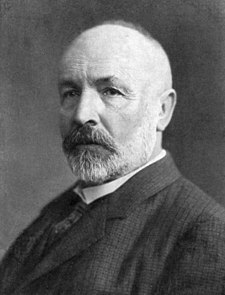
In mathematics, the art of proposing a question must be held of higher value than solving it.
Georg Cantor, 1867

I asked them if they were ok with a brief math history lesson.  They said yes as long as there wouldn't be a test afterwards (I like this group).  I gave them a few tidbits that I find really fascinating about Mr. Cantor:  he was one of the forerunners to formalize the rigorous definitions we use in calculus; he classified the levels of infinity (WHOA); people thought he was so crazy, he got thrown into an insane asylum.

So a genius beyond genius, if you ask me.

But one of the things I love most about Cantor is the quote from above.  Because it summarizes my thoughts not just on mathematics but on teaching mathematics so beautifully.

I told the parents, as a teacher, I'm much more interested in developing students who can ask deep questions, than students who know how to take a multiple-choice test.  I'm interested in helping students learn when to ask, "Mrs. Peterson...why do we do it this way?" or "What if we considered this case instead?"  I want to help develop curious students; and central to curiosity is the desire to ask good questions.

One challenge that I face, however, is that my students are used to their curiosity being satiated so quickly and easily.  If they want to know the answer to something, they can just Google it.  On their phone.  Right there.

Don't get me wrong, I love that we have access to so much knowledge.  The downside is...many of us are not used to really, truly working hard to find a satisfying answer.

And the downside to that?  We never experience the joy of a hard-fought discovery.

And that's one of the coolest things in life.

Hence, my love of this quote.

Wednesday, August 29, 2012

Best. Co-workers. Ever.

Yesterday was my birthday, and my fellow math teachers brought me this:


Why the question mark?  I think because many of them are over a half a century... ;)

Being just two weeks into a new job, one of the best feelings in the world is to know that you have co-workers who are going to work beside you and support you.  I completely lucked out with these people.  They really are the best.

Friday, August 17, 2012

New Blogger Initiative :: Week 1

I just started blogging a few months ago, and I can say it has been an amazing source of professional development for me.  I've gotten to connect with incredible math teachers that I really look up to, and I'm hoping to connect with more of you through the New Blogger Initiative.

Those of us who signed up for this shindig received six topics we could choose from this week.  One was:
Where does the name of your blog originate? Why did you choose that?
I was tempted to to respond to this prompt and just get rid of this page.  No one would be the wiser.  But, I figured that would would kind of defeat the point of this initiative, so if you're interested in why I named my blog Epsilon-Delta, feel free to peruse the aforementioned page.  Instead, I chose this question:
Talk about one or two specific things you plan on doing differently this year... and how specifically you are going to implement them/get the buy-in. Why do you want to do these things?

Two things I want to do differently this year:
  1. Introduce more math history
  2. Make students do more work in class
So, maybe a bit of background is necessary first here.  I've spent the past three years teaching at the college level.  Last year I taught concurrent College Algebra classes at a high school (so I was employed by a college but taught at a high school).  I liked the high school so much that I'm switching over to teach for them this year.  And that's about it. :)

1.  Introduce more math history.  This is something I've been pretty lame at the past three years.  Basically, the extent to which I teach math history can be summed up as "Hey, go research this mathematician and I'll give you some extra points on the upcoming test."  One of the things that I'm really excited for in switching to high school education is that I'll get about quadruple the amount of time with my students.  With that kind of time, there's no excuse for me not to do a better job with the whole math history thing.  One of the reasons I really want to incorporate more math history is that I know I learn better when there's context to what I'm studying.  I'm hoping that this is true for my students as well.  The second reason I want to incorporate it more is that it's freaking fascinating.  Mathematicians lead crazy lives.  And they're just really interesting.

So, how do I plan to do this?  Well, this year I intend to have a new mathematician up on one of my whiteboards every month.  Students will receive homework bonus points for writing at least a paragraph on the math superstar.  In addition, if they share one fact with the class and write it on the board, they'll receive a point for their class.  The class with the highest number of points at the end of each quarter will get some kind of prize.

2.  Make students do more work in class.  When I interviewed for my position I said something like, "I believe the person doing the talking, the person doing the writing, the person doing the work, is ultimately the person doing the learning."  The principal and the math curriculum specialist shot each other very strange looks at this point in the interview.  "Did you feed her that line?" they asked each other almost simultaneously.  Turns out, "The person doing the work is the person learning" is basically the slogan of our school!  Wohoo!

That's the good news.  The bad news is, while I believe in that slogan entirely...I'm not always the greatest at implementing it.

I think especially in the college scene, we still very much adhere to the "sage on stage" philosophy in teaching.

I'm determined to let go of the sage on stage mentality more this year.  One simple way I plan to do this is instead of throwing forty-nine different problems at my students in a 55-minute time interval, I hope to condense my lessons dramatically, show students a problem or two, and then have them work a problem on their own.  Once they're done, I'll ask them to check with a partner or group (my desks are set up in groups of four).  And then I can poll for results.  Basically, I talk less; they work more.

Another easy-to-implement, think-about-your-learning idea I want to implement is at the end of lessons, if I have a few extra minutes, tell my students to write a complete sentence about what they learned that day.  When they're done, they share with their group, and the group comes up with four or so key words for the day.  Then, the group texts them to me (polleverywhere.com), and we can have a lovely screen filled with what students believe are key words for the day.

The end.


Monday, August 13, 2012

#made4math 8.13.2012


My school recently opened a beautiful new "Collegiate Academy," which I have the privilege to be a part of.  With this privilege means that we are supposed to keep our gorgeous new classrooms feeling like a college.  No clutter; no posters on the walls; actually, nothing on the walls except our degrees.  While I know most teachers would be dismayed by these rules, I am breathing a sigh of relief.  Since my only teaching experience is at the college level, I was FREAKING OUT about having my own classroom.  But, when I found out that I was set free from the cheesy educational posters, I was able to (fairly) easily put together a classroom--with the help my wonderful husband--that hopefully still feels like a college classroom-ish.

So,  my first Made4Math Monday!

Probably my favorite part of the classroom is a little homage I paid to some nifty mathematicians.  I used some of my old textbooks as stands and bought three frames at the dollar store.


Beneath each picture is a quote from the mathematician:
Math Quotes for Frames

Also along that counter, I have a place for students to turn in make-up work and borrow annoyingly bright pencils (in hopes that they will be returned):


I got the template for the cube made out of playing cards here.

So, that's the back of the classroom.  In the front of the classroom, I have a SMART Board with two white boards on either side of it.  I have somewhat ambitious plans to introduce my students to the history of mathematics, so this is what one of my white boards looks like:


About every month, my plan is to introduce a new mathematician.  Any student who brings a paragraph on that mathematician will earn some homework bonus points.  In addition, any student who is willing to share one fact s/he found and write it on the board will receive a point for her/his class.  The class with the most points at the end of the quarter will receive some kind of prize.  My principal said she may even be able to get me some gift cards!

Here's what the bonus homework cards will look like.  It's a little cheesy (ah!), but it was one of the few templates I liked that VistaPrint.com would give 250 to you for free.  Say it with me, fah-ree!

Will I ever get used to "Mrs. Peterson"?  I just don't know.

To the left of that white board, I have an easel with five white poster boards (one for each class).  Before each test, I'm hoping to have each class summarize the big idea(s) of the unit, in their own words, symbols, or pictures.  At the end of the year, we may have some cool looking posters!  Maybe.


And, lastly, a good friend of mine--who has much better handwriting than I do--wrote up these classroom expectations for my bulletin board:


So, that's my classroom!  It's simple, but it's me.

Sunday, August 5, 2012

3-minute conversations: What do you do?

I got my hair cut yesterday. I don't like getting my hair cut. I think it's partially because it means I have to make small talk with a stranger, and I'm really bad at small talk. I'm ok for about three minutes and then I run out of things to say.

Which brings me to my conversation with the lovely girl who was forced to cut my lion mane hair yesterday.

We somehow got on the subject of high school, so I asked where she graduated from and was delighted to hear that she attended the school I'll be teaching at this year.
This is what the poor hair dressers face.
Yes, I tip well.

"That's great! That's where I teach!"

Cue look of How old are you exactly?

"Cool. What do you teach?"

"I teach math."

Cue look of I think I'm going to vomit all over your wet head.


"Oh, I'm sorry.  High school math.  Ugh.  I hated math.  I was terrible at it.  I didn't even take it junior and senior year.  All I need math for is addition and subtraction and maybe multiplication and division.  But, that's what a calculator is for."

Aaaaand...we made it to a whopping 2 minutes and 58 seconds!

There were so many things I wanted to say and ask...but nothing seemed right.

Sadly, I feel like I have conversations like this on a weekly basis.  As soon as (most) people find out I'm a math teacher it's like there's an unspoken wall that just appears.

If you're a math teacher, I'm guessing you experience this same phenomenon.  So...what do YOU do when this happens?  I feel like I'm disgracing my beloved field of mathematics by not defending it.  But in the same breath, I don't want to disregard a bad experience in high school.

Does anyone have something witty or funny to say to dispel the tension in moments like these?  I really hope so.  Because I'm clearly clueless as to what the protocol is.  I'd love some help here.  I'm getting tired of 3-minute conversations.

Tuesday, July 31, 2012

Reflections

Somehow summer classes have come and gone.  I know students take summer classes to learn information fast.  I hope that they really do learn.  I do know that I've learned so much more than I thought was possible, so I wanted to take some time to write what I thought went well this semester and what didn't go so well.  This way, if I get to teach calculus again, I can come back and remember what needs to be stressed more.

What I plan to keep:

What I need to change:
  • MUCH better review of composite functions before we get too deep into calculus.  The Chain Rule and u-substitutions are just too hard to teach if we can't recognize composite functions as such.
  • Critical points.  What are they and why are they important?  I didn't a good enough job emphasizing how important the locations are where the derivative is zero or undefined.  I assumed the geometric representation of critical values would be clear.  Never assume.
  • More emphasis on the fact that integration is related to antidifferentiation.  Specifically, Leibniz's elongated s combined with a differential (dx, for example) is the COMMAND to antidifferentiate.  Once you do the command, the elongated s and dx disappear.  Notation, notation, notation.  It's important!  [What worked in private tutoring:  the integral sign is like the capital letter and the differential is like the period at the end of a sentence.  You need both; and combined they tell you to find the antiderivative.]

What I plan to focus on more with my algebra and pre-calc students to get them ready for calculus:
  • Compositions.  I want to start early with this idea.  For example, what does √ mean?  Well, nothing, unless it has an argument.  Similarly, sin, ln, and ( )^2 are all meaningless without an input. 
  • Exponents, baby.  My Calc I students seem to be fine on this, but my Business Calc students were way behind (in general).  I need students to know that  can be rewritten as x^(-1/4).  And I need them to be able to recognize this quickly.  Furthermore,  as crazy as this sounds, I need them to be able to add and subtract fractions so we can milk the Power Rule for all it's worth.  Please, for the love of all that is good and holy, don't pull out your calculator to figure out what (1/2)-1 is.  Please.
  • I want to pound in the idea that the slope of a horizontal line is zero.  
  • How do we find the change in a quantity? (Subtraction.)  Seems simple, but it's something I need to emphasize more.
  • Difference quotients.  Less emphasis on computing a bunch of them, more emphasis on how it's just slope.  I don't want my students to memorize a formula, I want the formula to flow out of an understanding for how to mathematically write "How fast does y change with respect to x?"